Medix East Africa Limited
Laboratory reagents play a critical role in modern diagnostic testing. From hematology and clinical chemistry to immunology and microbiology, accurate laboratory results depend heavily on the quality and stability of the reagents being used.
Improper reagent storage is one of the leading causes of inaccurate laboratory results, analyzer errors, failed quality control tests, and shortened reagent lifespan. Even high-quality reagents can lose effectiveness when exposed to unsuitable environmental conditions.
Healthcare facilities, diagnostic laboratories, and hospitals must therefore implement proper reagent storage procedures to maintain testing accuracy, improve laboratory efficiency, reduce waste, and protect expensive diagnostic systems.
This guide explains how laboratories should properly store reagents, maintain stability, prevent contamination, and ensure consistent diagnostic performance.
Table of Contents
- What Are Laboratory Reagents?
- Why Proper Reagent Storage Matters
- Common Types of Laboratory Reagents
- Factors That Affect Reagent Stability
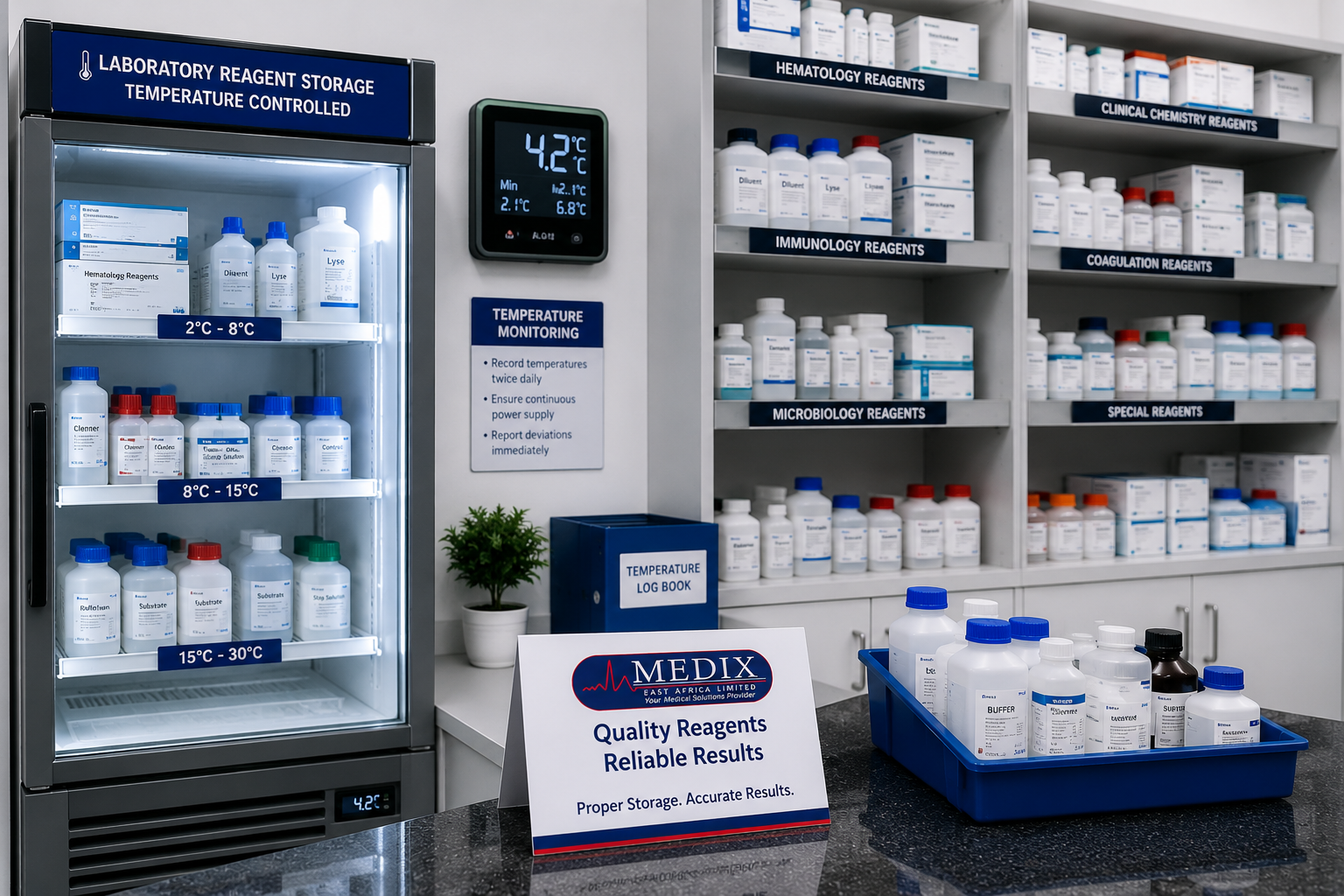
- Temperature Requirements for Reagents
- Refrigerated vs Room Temperature Storage
- Importance of Monitoring Storage Conditions
- Proper Labeling Procedures
- Preventing Reagent Contamination
- Reagent Handling Best Practices
- Storage Requirements for Hematology Reagents
- Storage Requirements for Chemistry Reagents
- Expiry Date Management
- Common Reagent Storage Mistakes
- Laboratory Safety Considerations
- Quality Control and Reagent Integrity
- Frequently Asked Questions
- Conclusion
What Are Laboratory Reagents?
Laboratory reagents are chemical or biological substances used during diagnostic testing and laboratory analysis. These substances react with patient samples to produce measurable results that help clinicians diagnose diseases and monitor patient health.
Reagents are commonly used in:
- Hematology testing
- Clinical chemistry
- Immunology
- Coagulation testing
- Microbiology
- Serology
- Molecular diagnostics
Modern laboratory analyzers rely heavily on properly formulated reagents to deliver accurate and reliable results.
Why Proper Reagent Storage Matters
Reagents are sensitive products that can deteriorate when exposed to unfavorable conditions.
Improper storage may lead to:
- inaccurate patient results
- analyzer calibration failure
- quality control errors
- reagent contamination
- reduced reagent lifespan
- increased operational costs
- equipment damage
Maintaining proper storage conditions helps laboratories preserve reagent integrity and achieve consistent diagnostic performance.
Common Types of Laboratory Reagents
Different laboratory departments use different categories of reagents.
Hematology Reagents
Used for Complete Blood Count (CBC) testing and blood cell analysis.
Examples include:
- diluents
- lysing reagents
- cleaners
- controls
- calibrators
Clinical Chemistry Reagents
Used in biochemical testing.
Examples include:
- glucose reagents
- liver function test reagents
- kidney function reagents
- electrolyte reagents
Immunology Reagents
Used for antigen and antibody testing.
Microbiology Reagents
Used for culture preparation and microbial identification.
Each reagent category may have specific storage requirements.
Factors That Affect Reagent Stability
Several environmental conditions can affect reagent performance.
Temperature
Extreme temperatures can damage reagent composition.
Light Exposure
Direct sunlight and UV exposure may degrade sensitive reagents.
Humidity
Excess moisture can affect chemical stability and packaging integrity.
Air Exposure
Repeated opening may introduce contamination.
Vibration
Improper transportation and storage conditions may reduce stability.
Laboratories should control these factors carefully.
Temperature Requirements for Reagents
Temperature control is one of the most important aspects of reagent storage.
Most laboratory reagents fall into one of the following categories:
| Storage Type | Temperature Range |
|---|---|
| Frozen Storage | -20°C or below |
| Refrigerated Storage | 2°C to 8°C |
| Room Temperature Storage | 15°C to 30°C |
Always follow manufacturer guidelines for each reagent type.
Refrigerated vs Room Temperature Storage
Some reagents require refrigeration to preserve chemical stability, while others remain stable at room temperature.
Refrigerated Reagents
These are commonly used for:
- hematology systems
- immunology analyzers
- certain chemistry reagents
Proper refrigeration helps prevent:
- chemical degradation
- bacterial growth
- loss of sensitivity
Room Temperature Reagents
Certain reagents are designed for stable room-temperature operation but still require:
- dry storage
- proper ventilation
- controlled humidity
Temperature fluctuations should still be minimized.
Importance of Monitoring Storage Conditions
Laboratories should continuously monitor storage environments.
Recommended monitoring practices include:
- daily temperature recording
- refrigerator monitoring logs
- alarm systems for temperature failure
- backup power systems
- periodic equipment validation
Sudden temperature changes may compromise reagent quality without obvious visual signs.
Proper Labeling Procedures
Clear labeling improves laboratory organization and safety.
Each reagent container should display:
- reagent name
- opening date
- expiry date
- storage instructions
- lot number
- operator initials where applicable
Proper labeling helps reduce usage errors and improves traceability.
Preventing Reagent Contamination
Contaminated reagents may produce unreliable patient results and damage laboratory analyzers.
Common contamination sources include:
- dirty pipettes
- improper sample handling
- repeated exposure to air
- cross-contamination
- poor hygiene practices
Laboratories should:
- close containers immediately after use
- use clean handling equipment
- avoid mixing reagent batches
- follow infection prevention protocols
Reagent Handling Best Practices
Proper handling procedures improve reagent lifespan and analyzer performance.
Recommended Practices
- Follow manufacturer instructions
- Avoid excessive shaking
- Use only compatible analyzers
- Store upright where recommended
- Avoid repeated freeze-thaw cycles
- Inspect for discoloration or precipitation
Damaged or expired reagents should never be used for patient testing.
Storage Requirements for Hematology Reagents
Hematology reagents are commonly used in CBC analyzers and require stable environmental conditions.
Important considerations include:
- proper temperature control
- contamination prevention
- regular inventory monitoring
- avoiding prolonged exposure to sunlight
Hematology reagents often include:
- diluents
- lysing solutions
- cleaning solutions
- controls
Using incompatible or poorly stored reagents may affect blood cell counting accuracy.
Storage Requirements for Chemistry Reagents
Clinical chemistry reagents may be highly sensitive to temperature fluctuations.
Laboratories should:
- maintain cold chain requirements
- monitor refrigerator stability
- separate incompatible chemicals
- avoid overcrowding storage units
Proper chemistry reagent storage improves test consistency and reduces repeat testing.
Expiry Date Management
Expired reagents may produce inaccurate diagnostic results.
Laboratories should implement:
- First-Expire-First-Out (FEFO) inventory systems
- routine inventory audits
- expiry tracking systems
- monthly stock reviews
Expired products should be disposed of according to laboratory safety regulations.
Common Reagent Storage Mistakes
Many laboratories experience preventable reagent-related problems.
Common mistakes include:
- storing reagents in domestic refrigerators
- poor temperature monitoring
- overcrowded storage shelves
- mixing expired and active stock
- leaving reagents exposed after use
- using incompatible reagents
These errors increase operational risk and affect patient care quality.
Laboratory Safety Considerations
Some reagents contain hazardous chemicals that require special handling procedures.
Laboratories should ensure:
- proper ventilation
- spill management procedures
- personal protective equipment
- chemical safety training
- emergency response planning
Safety compliance protects laboratory personnel and equipment.
Quality Control and Reagent Integrity
Quality control testing helps verify reagent performance.
Laboratories should routinely:
- run control materials
- verify calibration
- monitor analyzer flags
- investigate abnormal QC trends
Consistent QC monitoring helps identify reagent deterioration before patient testing is affected.
Frequently Asked Questions
Why is reagent storage important in laboratories?
Proper storage helps maintain reagent stability, improves test accuracy, prevents contamination, and protects laboratory analyzers.
Can poor reagent storage affect patient results?
Yes. Improperly stored reagents may produce inaccurate laboratory results and compromise patient diagnosis.
What temperature should laboratory reagents be stored at?
Storage temperatures depend on manufacturer specifications. Common ranges include refrigerated storage at 2°C to 8°C and room temperature storage between 15°C and 30°C.
Can expired reagents still be used?
No. Expired reagents may lose stability and should not be used for patient testing.
Why should laboratories monitor refrigerator temperatures?
Continuous monitoring helps detect temperature instability that may compromise reagent quality.
Conclusion
Proper laboratory reagent storage is essential for maintaining diagnostic accuracy, analyzer performance, patient safety, and laboratory efficiency. Reagents are sensitive materials that require controlled environmental conditions, proper handling, contamination prevention, and continuous monitoring.
Healthcare facilities that implement strong reagent storage procedures reduce testing errors, improve quality control performance, minimize waste, and extend reagent lifespan.
As laboratory automation continues advancing across Kenya and East Africa, maintaining proper reagent storage standards remains a critical component of reliable healthcare diagnostics.