Medix East Africa Limited
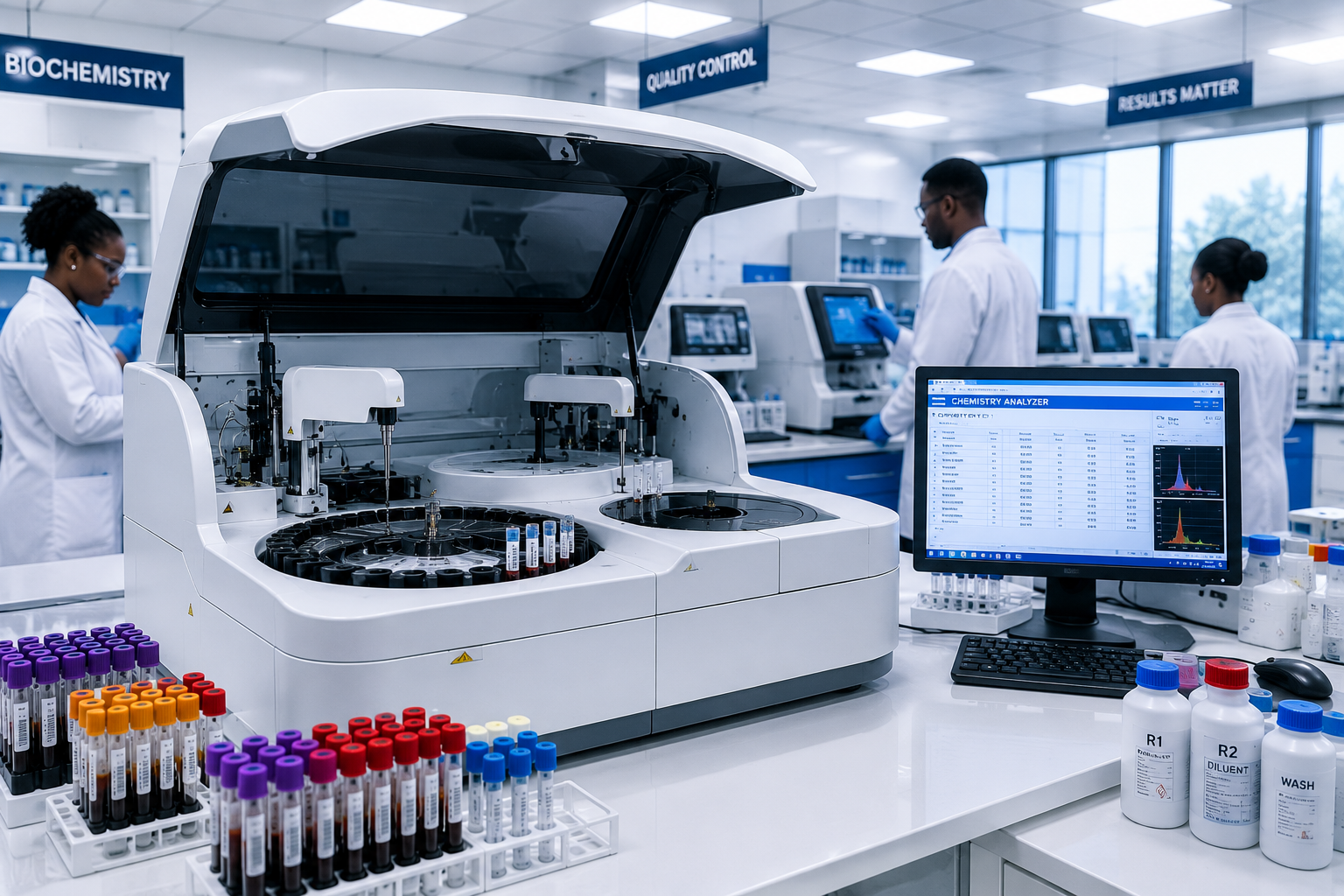
Modern hospitals depend heavily on fast and accurate laboratory diagnostics to support patient care, emergency response, treatment planning, and disease monitoring. As healthcare systems continue expanding across Kenya and East Africa, hospitals are increasingly investing in automated laboratory technologies to improve workflow efficiency and service delivery.
Among the most important diagnostic systems in modern laboratories are clinical chemistry analyzers. These systems automate biochemical testing processes, allowing healthcare facilities to process patient samples faster, reduce manual workload, improve accuracy, and enhance operational efficiency.
From emergency departments and intensive care units to outpatient clinics and specialized laboratories, chemistry analyzers help hospitals make faster clinical decisions while improving patient management and reducing operational delays.
This guide explains how chemistry analyzers improve hospital efficiency and why modern healthcare facilities continue investing in laboratory automation systems.
Table of Contents
- What Is a Chemistry Analyzer?
- Importance of Clinical Chemistry Testing
- Challenges Hospitals Face Without Automation
- Faster Laboratory Turnaround Time
- Improved Diagnostic Accuracy
- Reduction of Manual Workload
- Increased Sample Throughput
- Better Workflow Management
- Improved Emergency Response
- Integration with Hospital Information Systems
- Reduced Human Errors
- Better Reagent Management
- Improved Quality Control
- Reduced Operational Costs
- Enhanced Patient Care
- Benefits for Laboratory Staff
- Future of Hospital Laboratory Automation
- Frequently Asked Questions
- Conclusion
What Is a Chemistry Analyzer?
A chemistry analyzer is an automated laboratory system used to measure chemical substances in blood, serum, plasma, urine, and other biological samples.
These analyzers help hospitals perform tests such as:
- blood glucose
- kidney function
- liver function
- lipid profiles
- electrolyte testing
- cardiac markers
Modern chemistry analyzers automate laboratory processes and improve testing efficiency significantly.
Importance of Clinical Chemistry Testing
Clinical chemistry testing plays a major role in patient diagnosis and treatment monitoring.
Hospitals use chemistry analyzers daily for:
- emergency diagnostics
- chronic disease management
- inpatient monitoring
- outpatient screening
- intensive care support
- surgical patient evaluation
Rapid access to laboratory results helps clinicians make timely medical decisions.
Challenges Hospitals Face Without Automation
Hospitals relying heavily on manual laboratory processes often experience:
- delayed test results
- increased human errors
- longer patient waiting times
- staff overload
- inconsistent workflow
- reduced testing capacity
As patient volumes increase, manual systems become less efficient and more difficult to manage.
Laboratory automation helps healthcare facilities overcome these operational challenges.
Faster Laboratory Turnaround Time
One of the biggest advantages of chemistry analyzers is faster result generation.
Automated systems significantly reduce:
- sample processing time
- reagent preparation delays
- manual calculations
- reporting delays
Rapid turnaround time is especially important in:
- emergency departments
- intensive care units
- surgical units
- critical patient monitoring
Faster diagnostics improve clinical response and patient management.
Improved Diagnostic Accuracy
Automated chemistry analyzers improve result consistency and reduce manual testing variability.
Advanced systems help minimize:
- pipetting errors
- calculation mistakes
- sample handling errors
- transcription errors
Improved accuracy supports better diagnosis and treatment planning.
Reliable laboratory results are essential for effective patient care.
Reduction of Manual Workload
Before automation, laboratory personnel performed many processes manually.
These included:
- sample preparation
- reagent mixing
- timing reactions
- calculations
- result recording
Modern analyzers automate most of these procedures, allowing laboratory staff to focus on:
- quality control
- result verification
- workflow supervision
- patient management support
Automation improves staff productivity and reduces operational fatigue.
Increased Sample Throughput
Hospitals handling large patient volumes require systems capable of processing many samples efficiently.
Automated chemistry analyzers support:
- continuous sample loading
- batch processing
- high-volume testing
- simultaneous multi-parameter analysis
This improves laboratory capacity and reduces testing backlogs.
High-throughput systems are especially valuable in large hospitals and diagnostic centers.
Better Workflow Management
Laboratory automation improves overall workflow organization.
Modern chemistry analyzers help laboratories:
- prioritize urgent samples
- track sample status
- automate result reporting
- manage testing queues
- improve departmental coordination
Efficient workflow management reduces operational delays and improves service delivery.
Improved Emergency Response
Emergency departments require immediate access to accurate laboratory results.
Chemistry analyzers help hospitals respond quickly during:
- cardiac emergencies
- diabetic crises
- electrolyte imbalance cases
- poisoning incidents
- trauma management
Rapid chemistry testing supports faster medical intervention and improves patient outcomes.
Integration with Hospital Information Systems
Modern chemistry analyzers often integrate with:
- Laboratory Information Systems (LIS)
- Hospital Management Systems (HMS)
- Electronic Medical Records (EMR)
This integration improves:
- digital reporting
- patient record management
- result accessibility
- workflow coordination
Automated digital systems reduce paperwork and improve information management.
Reduced Human Errors
Manual laboratory procedures increase the risk of:
- incorrect calculations
- mislabeled samples
- transcription errors
- reagent handling mistakes
Automated systems standardize laboratory procedures and improve operational consistency.
Reducing errors improves diagnostic reliability and patient safety.
Better Reagent Management
Modern chemistry analyzers include advanced reagent management systems.
These systems help laboratories:
- monitor reagent levels
- reduce reagent wastage
- manage reagent expiry
- improve inventory planning
Proper reagent management improves operational efficiency and reduces unnecessary costs.
Improved Quality Control
Automated analyzers support advanced quality control systems.
These may include:
- automated calibration
- onboard QC monitoring
- error detection systems
- reagent validation
- performance tracking
Strong quality control improves laboratory accreditation compliance and testing reliability.
Reduced Operational Costs
Although automated analyzers require initial investment, they often reduce long-term operational expenses.
Automation helps reduce:
- repeat testing
- reagent wastage
- staffing pressure
- downtime
- workflow inefficiencies
Efficient laboratories achieve better resource utilization and improved financial performance.
Enhanced Patient Care
Hospital efficiency directly affects patient care quality.
Faster and more reliable laboratory services help:
- reduce patient waiting time
- improve treatment decisions
- support early diagnosis
- improve monitoring accuracy
- reduce hospitalization delays
Modern laboratory automation contributes significantly to better healthcare outcomes.
Benefits for Laboratory Staff
Automation improves the working environment for laboratory personnel.
Benefits include:
- reduced repetitive tasks
- improved workflow organization
- lower manual workload
- reduced stress
- better result management
Well-structured laboratory systems improve staff productivity and operational confidence.
Future of Hospital Laboratory Automation
Laboratory technology continues evolving rapidly.
Emerging trends include:
- artificial intelligence integration
- cloud-based diagnostics
- predictive maintenance systems
- remote analyzer monitoring
- smart laboratory workflow systems
Healthcare facilities adopting advanced automation are improving efficiency and strengthening diagnostic capability.
Frequently Asked Questions
How do chemistry analyzers improve hospital efficiency?
They automate laboratory testing, reduce turnaround time, improve accuracy, and increase testing capacity.
Why is faster laboratory turnaround important?
Rapid test results help clinicians make timely treatment decisions, especially in emergencies and critical care situations.
Can automation reduce laboratory errors?
Yes. Automated analyzers reduce manual handling and improve consistency during testing procedures.
Do chemistry analyzers improve patient care?
Yes. Faster and more accurate diagnostics help improve treatment planning and patient management.
Are automated chemistry analyzers suitable for all hospitals?
Analyzer selection depends on laboratory workload, patient volume, budget, and operational requirements.
Conclusion
Clinical chemistry analyzers have transformed modern healthcare laboratories by improving workflow efficiency, diagnostic accuracy, sample throughput, and overall hospital operations.
As healthcare facilities across Kenya and East Africa continue expanding diagnostic capacity, laboratory automation remains essential for delivering fast, reliable, and efficient patient care.
Hospitals investing in modern chemistry analyzers benefit from improved laboratory performance, reduced operational delays, better quality control, and enhanced patient management.
With growing healthcare demands and increasing patient volumes, chemistry analyzers will continue playing a central role in improving hospital efficiency and strengthening healthcare delivery systems.