Medix East Africa Limited
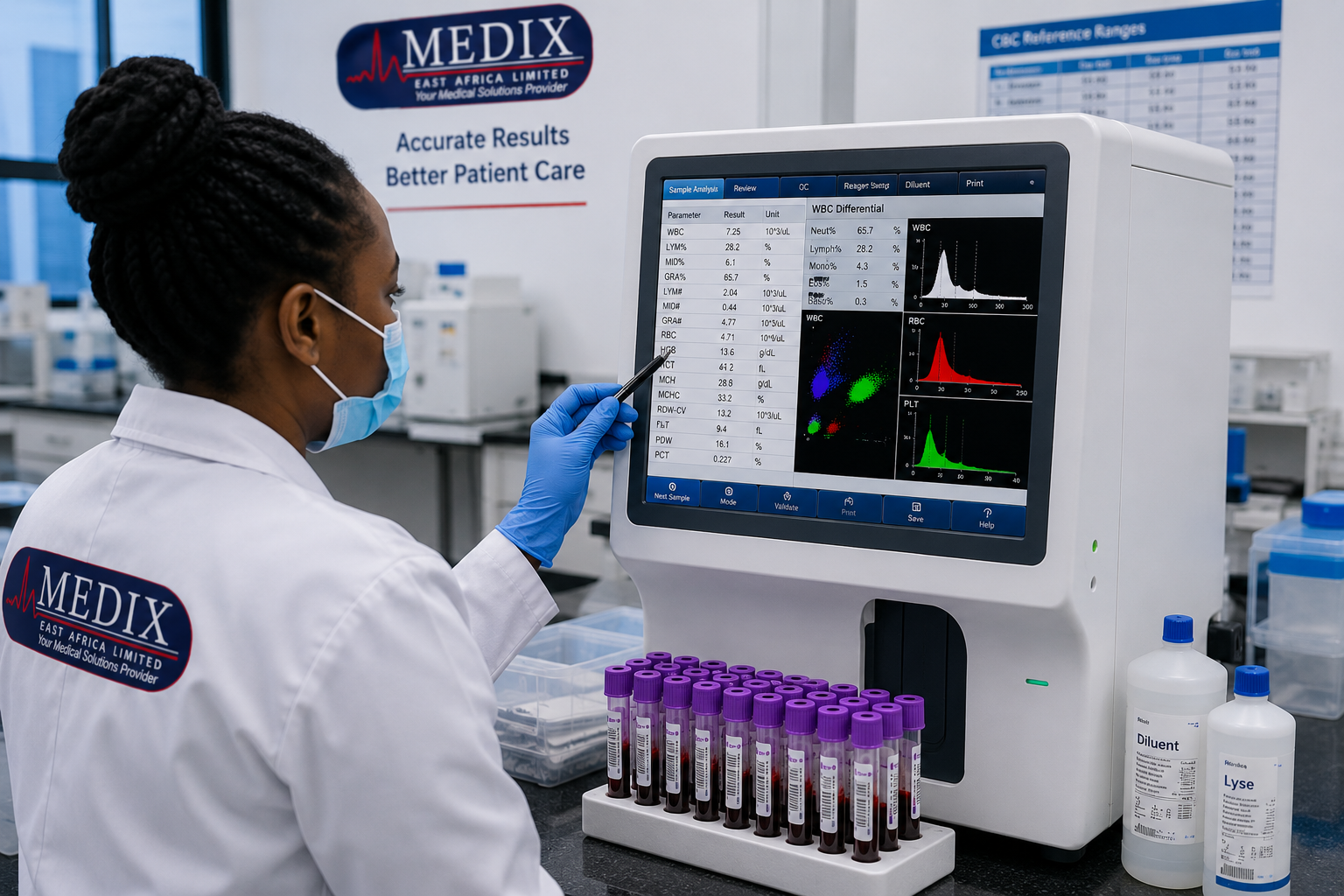
Selecting the right hematology analyzer is one of the most important decisions for any medical laboratory or healthcare facility. As hospitals and diagnostic centers continue investing in laboratory automation, many healthcare professionals frequently ask whether they should choose a 3-part or a 5-part hematology analyzer.
Both systems are designed to perform Complete Blood Count (CBC) testing, but they differ significantly in terms of diagnostic capability, complexity, automation level, and clinical applications.
Understanding these differences helps laboratory managers, procurement teams, clinicians, and biomedical engineers select systems that match their workload, diagnostic requirements, and operational budget.
This guide explains the major differences between 3-part and 5-part hematology analyzers and how laboratories across Kenya and East Africa can determine the most suitable solution.
Table of Contents
- What Is a Hematology Analyzer?
- What Is a 3-Part Hematology Analyzer?
- What Is a 5-Part Hematology Analyzer?
- Main Differences Between 3-Part and 5-Part Systems
- White Blood Cell Classification Explained
- Advantages of 3-Part Hematology Analyzers
- Advantages of 5-Part Hematology Analyzers
- Limitations of Each System
- Which Laboratories Need 3-Part Systems?
- Which Laboratories Need 5-Part Systems?
- Cost and Maintenance Considerations
- Throughput and Workflow Efficiency
- Reagent Requirements
- Choosing the Right Analyzer
- Frequently Asked Questions
- Conclusion
What Is a Hematology Analyzer?
A hematology analyzer is an automated laboratory system used to analyze blood samples and generate detailed Complete Blood Count (CBC) results.
These systems help healthcare providers evaluate:
- Red blood cells
- White blood cells
- Hemoglobin levels
- Platelets
- Infection indicators
- Blood disorders
Automated hematology analyzers improve laboratory efficiency, accuracy, and turnaround time while reducing manual counting errors.
What Is a 3-Part Hematology Analyzer?
A 3-part hematology analyzer classifies white blood cells into three major groups:
- Lymphocytes
- Monocytes
- Granulocytes
These analyzers are widely used in:
- Small hospitals
- Clinics
- Routine diagnostic laboratories
- Health centers
- Outpatient facilities
3-part systems are commonly selected for routine CBC testing where advanced differential analysis is not required.
What Is a 5-Part Hematology Analyzer?
A 5-part hematology analyzer performs a more advanced white blood cell differentiation.
It separates white blood cells into:
- Neutrophils
- Lymphocytes
- Monocytes
- Eosinophils
- Basophils
This detailed differentiation provides more advanced clinical information and improves diagnostic precision.
5-part analyzers are commonly used in:
- Referral hospitals
- Research laboratories
- Oncology centers
- Advanced diagnostic laboratories
- Specialized medical institutions
Main Differences Between 3-Part and 5-Part Systems
| Feature | 3-Part Analyzer | 5-Part Analyzer |
|---|---|---|
| WBC Differentiation | 3 groups | 5 groups |
| Diagnostic Detail | Basic | Advanced |
| Complexity | Lower | Higher |
| Cost | More affordable | More expensive |
| Maintenance | Easier | More technical |
| Reagent Usage | Lower | Higher |
| Throughput | Moderate | High |
| Clinical Applications | Routine testing | Specialized diagnostics |
The primary difference lies in white blood cell differentiation capability.
White Blood Cell Classification Explained
White blood cells help the body fight infections and immune-related conditions.
A 3-part analyzer groups white blood cells broadly, while a 5-part analyzer identifies individual subtypes more precisely.
Neutrophils
Usually elevated during bacterial infections.
Lymphocytes
Often associated with viral infections and immune response.
Monocytes
Help remove damaged tissue and pathogens.
Eosinophils
Commonly elevated during allergic reactions and parasitic infections.
Basophils
Associated with inflammatory and allergic responses.
Detailed differentiation improves clinical interpretation and disease detection.
Advantages of 3-Part Hematology Analyzers
3-part systems remain highly valuable in many healthcare environments.
Lower Initial Cost
These analyzers are more affordable for small laboratories and clinics.
Simpler Operation
Training requirements are generally easier for laboratory staff.
Lower Maintenance Requirements
Fewer complex components reduce servicing complexity.
Faster Routine Testing
Suitable for facilities handling standard CBC workloads.
Lower Reagent Consumption
Operational costs are generally lower compared to advanced systems.
Advantages of 5-Part Hematology Analyzers
5-part systems provide more comprehensive diagnostic information.
Advanced Differential Analysis
More accurate white blood cell classification improves diagnosis.
Better Disease Detection
Supports identification of infections, leukemia, inflammation, and immune disorders.
Improved Clinical Decision-Making
Physicians receive more detailed patient information.
Higher Automation Capability
Advanced workflow integration improves efficiency in busy laboratories.
Better Research Applications
Useful for specialized medical and scientific investigations.
Limitations of Each System
Limitations of 3-Part Analyzers
- Limited white blood cell differentiation
- Less suitable for advanced diagnostics
- Lower abnormal cell detection capability
Limitations of 5-Part Analyzers
- Higher purchase cost
- More expensive reagents
- More technical maintenance requirements
- Requires highly trained personnel
Laboratories should balance operational needs with available resources.
Which Laboratories Need 3-Part Systems?
3-part analyzers are suitable for:
- Community hospitals
- Rural healthcare facilities
- Outpatient clinics
- Small diagnostic laboratories
- Basic health screening centers
Facilities mainly performing routine CBC testing often achieve excellent performance with 3-part systems.
Which Laboratories Need 5-Part Systems?
5-part analyzers are ideal for:
- Referral hospitals
- Specialized diagnostic laboratories
- Oncology centers
- Research institutions
- High-volume laboratories
Facilities handling complex clinical cases benefit significantly from advanced differential capability.
Cost and Maintenance Considerations
Budget planning is important when selecting hematology systems.
3-Part Systems
Typically involve:
- lower acquisition cost
- lower reagent usage
- reduced maintenance complexity
5-Part Systems
Usually require:
- larger investment
- specialized reagents
- advanced servicing support
- higher operational costs
However, advanced diagnostic capability may justify the additional investment for larger healthcare facilities.
Throughput and Workflow Efficiency
Modern laboratories require systems capable of handling increasing patient volumes.
5-part analyzers generally offer:
- higher throughput
- better automation
- improved data management
- LIS integration
3-part systems remain efficient for moderate workloads and routine laboratory environments.
Reagent Requirements
Hematology analyzers rely heavily on compatible reagents for accurate performance.
Common reagents include:
- diluents
- lysing solutions
- cleaners
- controls
- calibrators
Using genuine and manufacturer-compatible reagents helps:
- maintain accuracy
- reduce downtime
- protect analyzer components
- improve analyzer lifespan
Choosing the Right Analyzer
Healthcare facilities should evaluate several factors before purchasing a hematology analyzer.
Important Considerations
Laboratory Workload
Daily sample volume affects analyzer requirements.
Diagnostic Complexity
Advanced hospitals may require 5-part systems.
Budget
Initial and long-term operational costs must be considered.
Technical Support
Reliable biomedical servicing is essential.
Reagent Availability
Consistent reagent supply improves laboratory continuity.
Future Expansion
Facilities planning growth may benefit from scalable systems.
Working with experienced laboratory equipment suppliers helps healthcare institutions make better purchasing decisions.
Frequently Asked Questions
What is the main difference between 3-part and 5-part hematology analyzers?
The main difference is white blood cell differentiation. A 3-part analyzer classifies WBCs into three groups, while a 5-part analyzer separates them into five detailed categories.
Is a 3-part hematology analyzer suitable for hospitals?
Yes. Many hospitals and diagnostic centers successfully use 3-part analyzers for routine CBC testing.
Why are 5-part hematology analyzers more expensive?
They use more advanced technology, provide detailed differential analysis, and often require specialized reagents and servicing.
Which analyzer is better for high-volume laboratories?
High-volume and specialized laboratories often benefit more from 5-part systems due to advanced automation and diagnostic capability.
Can poor-quality reagents affect analyzer results?
Yes. Low-quality or incompatible reagents may cause inaccurate results, analyzer damage, and increased downtime.
Conclusion
Both 3-part and 5-part hematology analyzers play an important role in modern laboratory diagnostics. The best choice depends on laboratory workload, diagnostic requirements, available budget, and long-term operational goals.
3-part systems remain highly effective for routine CBC testing in smaller healthcare facilities, while 5-part analyzers provide advanced differential analysis suitable for specialized diagnostics and large hospitals.
Healthcare facilities investing in laboratory automation should prioritize reliability, reagent compatibility, technical support, and long-term service availability when selecting hematology systems.