Medix East Africa Limited
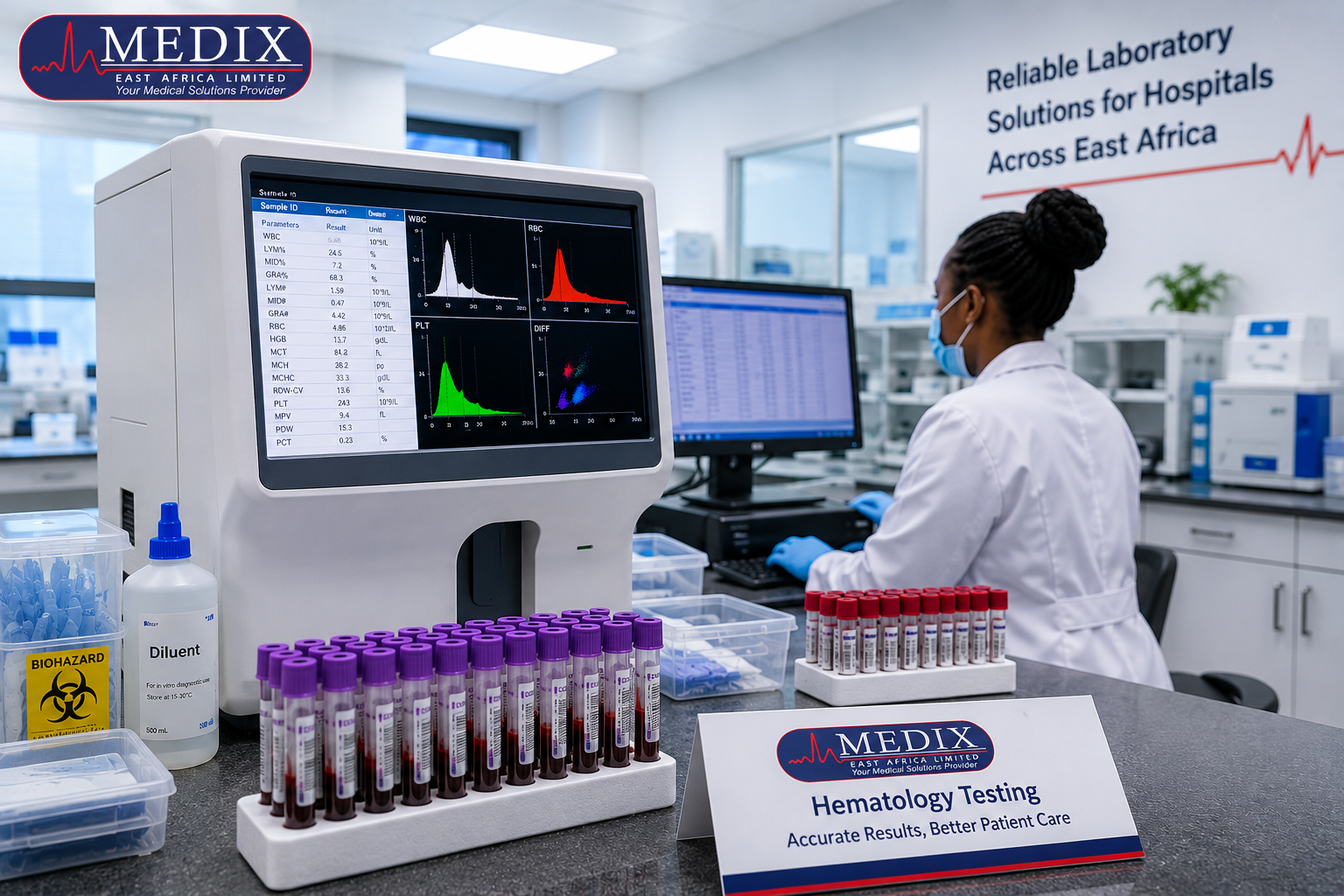
Modern laboratories rely heavily on hematology analyzers to provide accurate and timely blood analysis for patient diagnosis and treatment. These systems have become an essential part of hospitals, diagnostic centers, research institutions, and private laboratories across Kenya and East Africa.
From routine Full Blood Count (CBC) testing to advanced differential analysis, hematology analyzers help medical professionals detect infections, anemia, blood disorders, inflammation, immune system conditions, and many other health problems.
As healthcare facilities continue investing in laboratory automation, understanding how hematology analyzers work and how to choose the right system has become increasingly important for laboratory managers, procurement officers, biomedical engineers, and clinicians.
This guide explains everything healthcare providers need to know about hematology analyzers, including their applications, types, benefits, maintenance requirements, and considerations when purchasing laboratory systems in Kenya.
Table of Contents
- What Is a Hematology Analyzer?
- How Hematology Analyzers Work
- Importance of CBC Testing
- Types of Hematology Analyzers
- Difference Between 3-Part and 5-Part Hematology Analyzers
- Main Components of a Hematology Analyzer
- Common Parameters Measured
- Applications in Hospitals and Laboratories
- Benefits of Automated Hematology Systems
- Common Challenges Laboratories Face
- Importance of Quality Control
- Preventive Maintenance Requirements
- Choosing the Right Hematology Analyzer
- Common Hematology Analyzer Errors
- Future of Hematology Automation
- Frequently Asked Questions
- Conclusion
What Is a Hematology Analyzer?
A hematology analyzer is a laboratory diagnostic machine used to analyze blood samples and generate detailed information about blood cells. These systems are primarily used for Full Blood Count (FBC) or Complete Blood Count (CBC) testing.
The analyzer measures and evaluates:
- Red blood cells (RBCs)
- White blood cells (WBCs)
- Hemoglobin levels
- Platelets
- Hematocrit
- White blood cell differentials
By automating blood analysis, hematology analyzers reduce manual errors, improve accuracy, increase testing speed, and support better clinical decision-making.
How Hematology Analyzers Work
Modern hematology analyzers use advanced technologies to identify and count blood cells.
The most common technologies include:
Electrical Impedance Method
This method counts cells by detecting changes in electrical resistance as blood cells pass through a small aperture.
Flow Cytometry
Advanced analyzers use laser-based flow cytometry to classify blood cells according to size, structure, and internal complexity.
Cyanide-Free Hemoglobin Testing
Modern analyzers use safer photometric technologies to measure hemoglobin concentration without hazardous chemicals.
Blood samples are aspirated into the analyzer, diluted with reagents, processed internally, and analyzed within minutes.
Importance of CBC Testing
Complete Blood Count testing is one of the most commonly requested laboratory investigations worldwide.
CBC testing helps healthcare providers diagnose:
- Anemia
- Bacterial infections
- Viral infections
- Leukemia
- Blood clotting disorders
- Immune system conditions
- Inflammatory diseases
- Internal bleeding
- Nutritional deficiencies
Routine CBC testing is essential in:
- Emergency departments
- Intensive care units
- Outpatient clinics
- Oncology departments
- Surgical units
- Maternity care
- Pediatric medicine
Types of Hematology Analyzers
Different laboratories require different analyzer capacities depending on workload, specialization, and budget.
3-Part Hematology Analyzers
These systems classify white blood cells into:
- Lymphocytes
- Monocytes
- Granulocytes
They are commonly used in:
- Small hospitals
- Clinics
- Diagnostic centers
- Routine laboratory testing
Advantages include:
- Lower operational cost
- Simpler maintenance
- Compact size
- Faster training requirements
5-Part Hematology Analyzers
These systems provide more advanced white blood cell differentiation:
- Neutrophils
- Lymphocytes
- Monocytes
- Eosinophils
- Basophils
They are ideal for:
- Referral hospitals
- Research institutions
- Advanced diagnostic laboratories
- Specialized testing centers
Advantages include:
- Higher diagnostic accuracy
- Improved abnormal cell detection
- Better infection differentiation
- Enhanced research capability
Difference Between 3-Part and 5-Part Hematology Analyzers
One of the most important decisions laboratories face is choosing between 3-part and 5-part systems.
| Feature | 3-Part Analyzer | 5-Part Analyzer |
|---|---|---|
| WBC Classification | Basic | Advanced |
| Complexity | Lower | Higher |
| Cost | More affordable | More expensive |
| Maintenance | Simpler | More technical |
| Diagnostic Capability | Routine testing | Specialized diagnostics |
| Throughput | Moderate | High |
Laboratories handling advanced diagnostics often benefit more from 5-part systems, while smaller facilities may achieve efficient routine testing using 3-part analyzers.
Main Components of a Hematology Analyzer
A hematology analyzer contains several integrated systems that work together.
These include:
- Sample aspiration probe
- Reagent chambers
- Hydraulic systems
- Flow cells
- Detectors
- Mixing chambers
- Data processing software
- Internal quality control systems
Proper maintenance of these components is essential for accurate performance.
Common Parameters Measured
Modern hematology analyzers generate multiple parameters, including:
Red Blood Cell Parameters
- RBC count
- Hemoglobin (HGB)
- Hematocrit (HCT)
- MCV
- MCH
- MCHC
White Blood Cell Parameters
- Total WBC count
- Differential counts
Platelet Parameters
- Platelet count
- Mean platelet volume
These results support physicians in evaluating patient health conditions.
Applications in Hospitals and Laboratories
Hematology analyzers are used across many healthcare departments.
Clinical Laboratories
Routine diagnostic testing and patient screening.
Emergency Medicine
Rapid CBC testing during emergencies.
Oncology
Monitoring chemotherapy patients and bone marrow function.
Infectious Disease Monitoring
Evaluating immune response and infection progression.
Maternal and Child Healthcare
Monitoring anemia and infection risk during pregnancy and pediatric care.
Benefits of Automated Hematology Systems
Automation has transformed laboratory operations significantly.
Key benefits include:
- Faster turnaround time
- Improved accuracy
- Reduced manual labor
- Better workflow efficiency
- Reduced contamination risk
- Improved data management
- Higher sample throughput
Modern analyzers also integrate with Laboratory Information Systems (LIS), allowing seamless reporting and digital record management.
Common Challenges Laboratories Face
Despite their advantages, laboratories may encounter operational challenges.
These include:
- Reagent incompatibility
- Poor sample quality
- Calibration errors
- Inadequate maintenance
- Probe clogging
- Electrical instability
- Poor environmental conditions
Using genuine reagents and performing preventive maintenance significantly reduces these risks.
Importance of Quality Control
Quality control is critical in hematology testing.
Without proper quality assurance:
- inaccurate patient results may occur
- misdiagnosis risk increases
- repeat testing costs rise
- laboratory accreditation may be affected
Laboratories should perform:
- daily controls
- calibration verification
- reagent checks
- preventive maintenance
- environmental monitoring
Preventive Maintenance Requirements
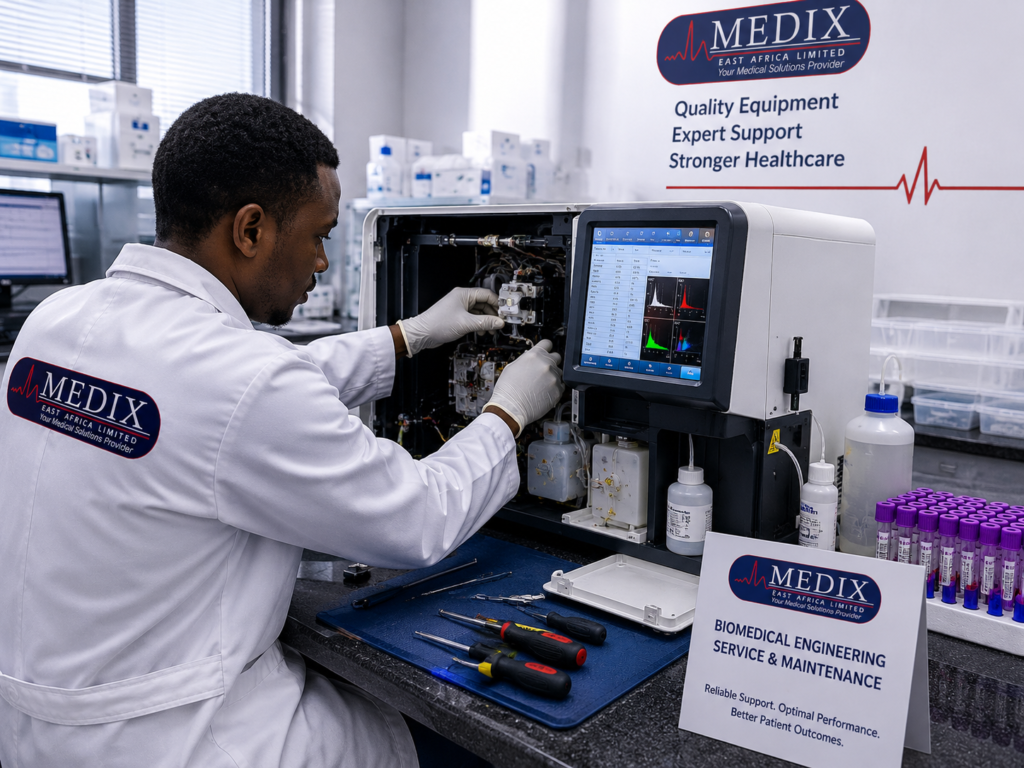
Routine maintenance helps extend analyzer lifespan and improve performance.
Recommended maintenance includes:
- Daily cleaning
- Probe maintenance
- Background checks
- Reagent monitoring
- Waste management
- Calibration verification
- Periodic servicing by qualified biomedical engineers
Ignoring maintenance often leads to downtime and expensive repairs.
Choosing the Right Hematology Analyzer
Healthcare facilities should evaluate several factors before purchasing an analyzer.
Key Considerations
- Daily sample volume
- Budget
- Space availability
- Reagent availability
- Technical support
- Warranty
- Biomedical support
- Integration capability
- Training requirements
Partnering with reliable medical equipment suppliers ensures long-term support and consistent reagent supply.
Common Hematology Analyzer Errors
Some frequently encountered issues include:
- Low cell count warnings
- High background errors
- Aspiration failure
- Clogged apertures
- Abnormal histogram flags
- Reagent sensor errors
Proper troubleshooting and routine servicing help minimize operational interruptions.
Future of Hematology Automation
The future of laboratory hematology continues to evolve rapidly.
Emerging trends include:
- Artificial intelligence integration
- Cloud-based laboratory reporting
- Remote diagnostics
- Advanced abnormal cell detection
- Automated calibration systems
- Improved workflow automation
Healthcare facilities investing in modern laboratory systems are improving diagnostic accuracy and patient care outcomes significantly.
Frequently Asked Questions
Your Attractive Heading
What does a hematology analyzer test?
A hematology analyzer evaluates blood samples to measure red blood cells, white blood cells, hemoglobin, platelets, and other blood parameters used in CBC testing.
What is the difference between a 3-part and 5-part hematology analyzer?
A 3-part analyzer provides basic white blood cell differentiation, while a 5-part analyzer offers advanced classification of white blood cells for more detailed diagnostics.
Why are hematology analyzers important in hospitals?
They help healthcare providers diagnose infections, anemia, blood disorders, immune conditions, and many other medical problems quickly and accurately.
How often should hematology analyzers be serviced?
Routine preventive maintenance should be performed regularly, with periodic servicing by qualified biomedical engineers according to manufacturer recommendations.
Can poor-quality reagents affect analyzer performance?
Yes. Poor-quality or incompatible reagents can cause inaccurate results, increased downtime, and analyzer damage.
Conclusion
Hematology analyzers remain among the most important laboratory diagnostic systems in modern healthcare. Their ability to provide rapid, accurate, and automated blood analysis supports better patient diagnosis, treatment monitoring, and clinical decision-making.
As healthcare facilities across Kenya continue modernizing laboratory operations, selecting reliable hematology systems, using genuine reagents, and maintaining proper quality control procedures are essential for achieving consistent diagnostic performance.
Healthcare providers investing in advanced laboratory automation are positioning themselves to deliver more efficient, accurate, and reliable patient care.