Medix East Africa Limited
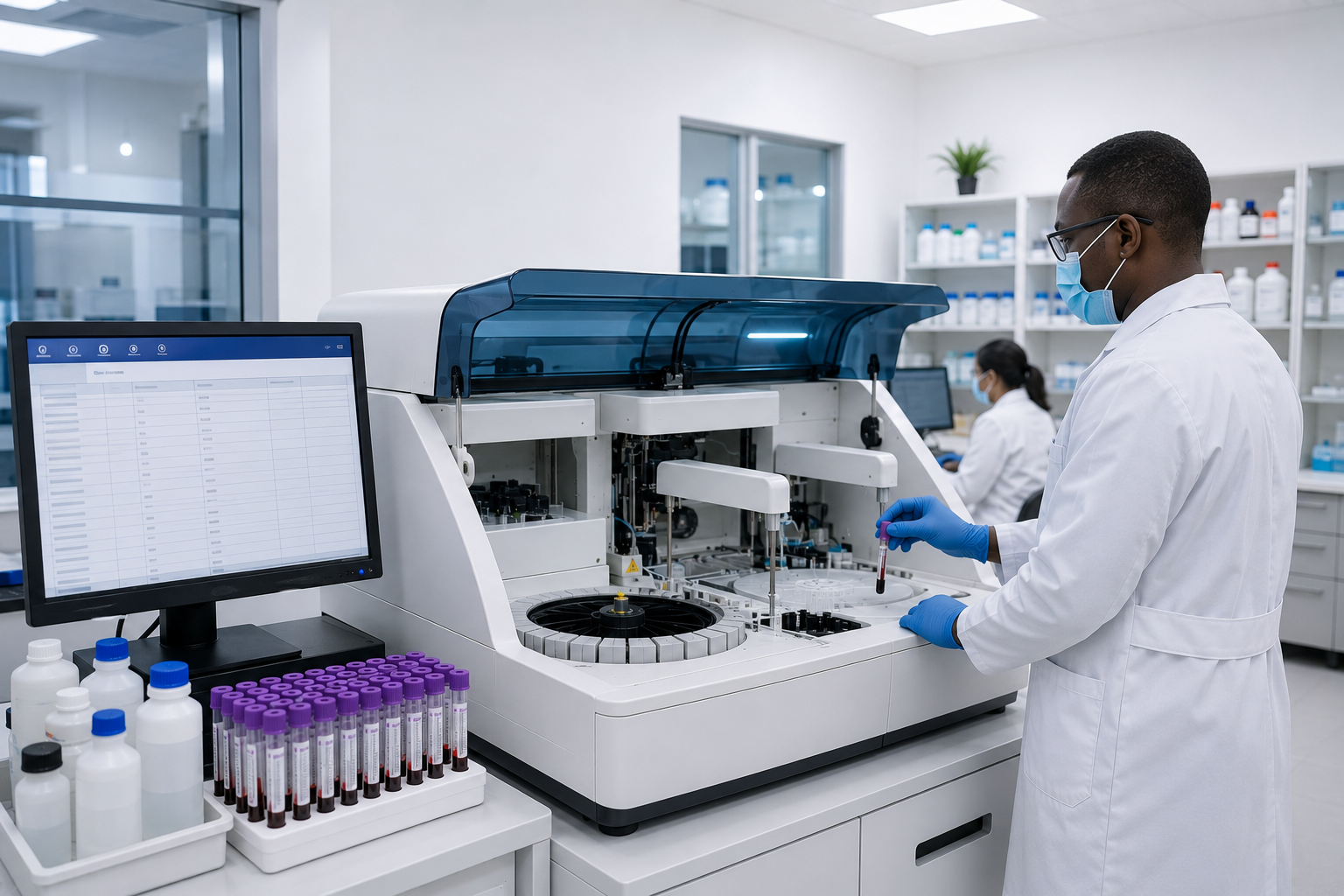
Clinical chemistry analyzers are among the most important diagnostic systems used in modern healthcare laboratories. These analyzers help hospitals, diagnostic centers, and research laboratories perform biochemical testing quickly, accurately, and efficiently.
From liver function testing and kidney profiling to glucose monitoring and electrolyte analysis, chemistry analyzers play a major role in disease diagnosis, treatment monitoring, and preventive healthcare.
As healthcare facilities across Kenya and East Africa continue modernizing laboratory operations, automated chemistry analyzers have become essential for improving workflow efficiency, reducing turnaround time, and enhancing patient care outcomes.
This guide explains how clinical chemistry analyzers work, the types available, their applications, maintenance requirements, reagent handling procedures, and how healthcare facilities can choose the right chemistry analyzer system.
Table of Contents
- What Is a Clinical Chemistry Analyzer?
- Importance of Clinical Chemistry Testing
- How Clinical Chemistry Analyzers Work
- Main Components of a Chemistry Analyzer
- Types of Clinical Chemistry Analyzers
- Semi-Automated vs Fully Automated Systems
- Common Chemistry Tests Performed
- Applications in Hospitals and Laboratories
- Benefits of Automated Chemistry Systems
- Importance of Reagent Quality
- Quality Control in Clinical Chemistry
- Preventive Maintenance Requirements
- Common Analyzer Errors and Troubleshooting
- Choosing the Right Chemistry Analyzer
- Future of Clinical Chemistry Automation
- Frequently Asked Questions
- Conclusion
What Is a Clinical Chemistry Analyzer?
A clinical chemistry analyzer is a laboratory diagnostic system used to measure chemical substances in blood, serum, plasma, urine, and other body fluids.
These analyzers help healthcare professionals evaluate:
- organ function
- metabolic disorders
- electrolyte balance
- blood glucose levels
- cardiovascular health
- kidney function
- liver function
Modern chemistry analyzers automate testing procedures, reducing manual workload while improving result consistency and laboratory efficiency.
Importance of Clinical Chemistry Testing
Clinical chemistry testing is essential in routine patient diagnosis and disease monitoring.
Healthcare providers rely on chemistry testing for:
- diabetes management
- kidney disease diagnosis
- liver disease monitoring
- cardiac risk assessment
- electrolyte evaluation
- infection monitoring
- nutritional assessment
Chemistry analyzers support nearly every department in modern healthcare facilities.
How Clinical Chemistry Analyzers Work
Clinical chemistry analyzers process patient samples using automated biochemical reactions.
The general process includes:
- Sample aspiration
- Reagent mixing
- Incubation
- Chemical reaction analysis
- Optical detection
- Result calculation
- Data reporting
Most analyzers use photometric technology to measure changes in light absorption during chemical reactions.
Advanced systems may also use:
- ion-selective electrode technology
- turbidimetry
- immunoturbidimetry
- spectrophotometry
Automation helps laboratories process large sample volumes with high accuracy.
Main Components of a Chemistry Analyzer
Modern chemistry analyzers contain several integrated systems.
Sample Handling Unit
Responsible for sample aspiration and positioning.
Reagent System
Stores and dispenses chemistry reagents accurately.
Incubation Chamber
Maintains stable reaction temperatures.
Optical Detection System
Measures chemical reaction intensity.
Washing System
Prevents contamination between tests.
Software Interface
Processes results and manages workflow.
Proper maintenance of these components is essential for analyzer performance.
Types of Clinical Chemistry Analyzers
Healthcare facilities choose analyzers based on workload, testing complexity, and laboratory size.
Semi-Automated Chemistry Analyzers
These systems require partial operator involvement.
Common features include:
- lower acquisition cost
- moderate throughput
- manual reagent handling
- suitable for small laboratories
They are widely used in:
- clinics
- health centers
- small diagnostic laboratories
Fully Automated Chemistry Analyzers
These systems automate nearly the entire testing process.
Advantages include:
- high throughput
- minimal manual intervention
- advanced workflow automation
- improved efficiency
- reduced human error
They are ideal for:
- referral hospitals
- large laboratories
- research institutions
- high-volume facilities
Semi-Automated vs Fully Automated Systems
| Feature | Semi-Automated | Fully Automated |
|---|---|---|
| Automation Level | Partial | Full |
| Throughput | Moderate | High |
| Manual Handling | Higher | Lower |
| Cost | Lower | Higher |
| Workflow Efficiency | Moderate | Advanced |
| Maintenance Complexity | Lower | Higher |
| Suitable For | Small labs | Large hospitals |
Laboratories should select systems according to operational requirements and long-term expansion plans.
Common Chemistry Tests Performed
Clinical chemistry analyzers perform a wide range of biochemical tests.
Liver Function Tests
- ALT
- AST
- Bilirubin
- Albumin
Kidney Function Tests
- Creatinine
- Urea
- Uric acid
Diabetes Monitoring
- Blood glucose
- HbA1c
Lipid Profile Tests
- Cholesterol
- HDL
- LDL
- Triglycerides
Electrolyte Testing
- Sodium
- Potassium
- Chloride
Cardiac Markers
Used in cardiovascular disease assessment.
These tests support rapid clinical decision-making.
Applications in Hospitals and Laboratories
Clinical chemistry analyzers are widely used in:
- emergency departments
- intensive care units
- outpatient laboratories
- inpatient services
- research institutions
- private diagnostic centers
They support both routine screening and specialized diagnostics.
Benefits of Automated Chemistry Systems
Automation has significantly improved laboratory performance.
Key advantages include:
- faster turnaround time
- improved accuracy
- reduced manual errors
- increased throughput
- better workflow management
- improved sample traceability
- reduced reagent wastage
Modern analyzers also integrate with Laboratory Information Systems (LIS) for seamless digital reporting.
Importance of Reagent Quality
Chemistry analyzers rely heavily on high-quality reagents.
Poor-quality or incompatible reagents may cause:
- inaccurate patient results
- calibration instability
- analyzer errors
- increased maintenance costs
- shortened equipment lifespan
Laboratories should always use:
- genuine reagents
- compatible controls
- approved calibrators
Proper reagent storage is equally important for maintaining stability.
Quality Control in Clinical Chemistry
Quality control ensures analyzer accuracy and reliability.
Laboratories should routinely perform:
- daily control testing
- calibration verification
- reagent validation
- preventive maintenance
- environmental monitoring
Consistent QC procedures help laboratories maintain accreditation standards and diagnostic confidence.
Preventive Maintenance Requirements
Routine servicing improves analyzer reliability and lifespan.
Recommended maintenance includes:
- daily cleaning
- probe inspection
- tubing checks
- reagent system cleaning
- optical system inspection
- temperature verification
- software updates
Preventive maintenance reduces downtime and improves operational efficiency.
Common Analyzer Errors and Troubleshooting
Laboratories may occasionally encounter analyzer problems.
Common issues include:
- reagent aspiration errors
- calibration failure
- blocked tubing
- optical system contamination
- temperature instability
- probe obstruction
- sample carryover
Early troubleshooting and biomedical support help prevent major operational disruptions.
Choosing the Right Chemistry Analyzer
Healthcare facilities should evaluate several factors before purchasing a chemistry analyzer.
Important Considerations
Daily Workload
High-volume laboratories require advanced automation.
Available Budget
Both acquisition and operational costs should be considered.
Technical Support
Reliable biomedical servicing is essential.
Reagent Availability
Consistent reagent supply improves laboratory continuity.
Space Requirements
Analyzer size should match laboratory infrastructure.
Future Expansion
Facilities planning growth should consider scalable systems.
Working with experienced laboratory equipment suppliers helps healthcare institutions select appropriate solutions.
Future of Clinical Chemistry Automation
Clinical chemistry technology continues evolving rapidly.
Emerging trends include:
- artificial intelligence integration
- remote diagnostics
- cloud-based laboratory reporting
- improved workflow automation
- enhanced reagent management
- smart maintenance systems
Modern laboratories are increasingly adopting fully integrated diagnostic automation systems.
Frequently Asked Questions
What does a clinical chemistry analyzer do?
A clinical chemistry analyzer measures chemical substances in patient samples to help diagnose and monitor diseases.
What is the difference between semi-automated and fully automated analyzers?
Semi-automated analyzers require partial manual operation, while fully automated systems perform most testing procedures automatically.
Why are chemistry analyzers important in hospitals?
They support diagnosis, treatment monitoring, emergency care, and routine patient screening across multiple medical departments.
Can poor-quality reagents affect analyzer performance?
Yes. Poor-quality reagents may cause inaccurate results, calibration failure, and analyzer damage.
How often should chemistry analyzers be serviced?
Routine preventive maintenance should be performed regularly according to manufacturer recommendations and laboratory workload.
Conclusion
Clinical chemistry analyzers remain essential diagnostic systems in modern healthcare laboratories. Their ability to automate biochemical testing improves laboratory efficiency, diagnostic accuracy, and patient care outcomes.
Healthcare facilities investing in advanced chemistry systems benefit from improved workflow automation, faster turnaround time, and better clinical decision-making support.
Selecting reliable analyzers, using genuine reagents, implementing strong quality control procedures, and maintaining proper preventive servicing are critical for long-term laboratory success.
As healthcare continues modernizing across Kenya and East Africa, automated clinical chemistry systems will remain central to efficient and reliable medical diagnostics.