Medix East Africa Limited
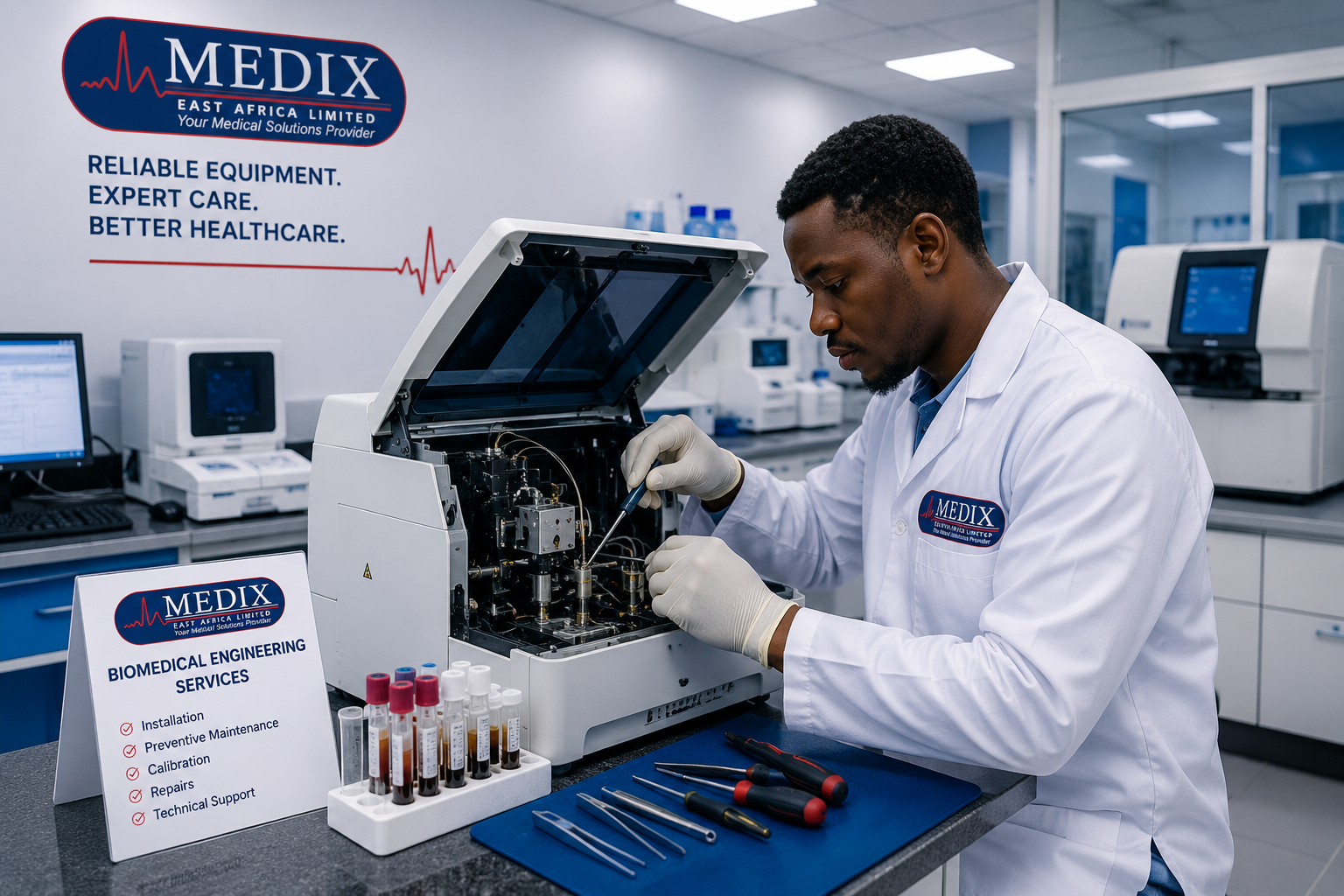
Biomedical equipment plays a critical role in modern healthcare delivery. From laboratory analyzers and patient monitors to ventilators and infusion pumps, healthcare facilities depend heavily on properly functioning medical equipment for accurate diagnosis, patient monitoring, and treatment.
However, many hospitals and laboratories experience avoidable equipment failures due to poor maintenance practices, delayed servicing, improper handling, and lack of preventive maintenance programs.
Equipment downtime not only disrupts healthcare operations but may also compromise patient safety, increase operational costs, delay diagnosis, and shorten equipment lifespan.
Understanding the most common biomedical equipment maintenance mistakes helps healthcare facilities improve equipment reliability, reduce unexpected breakdowns, and maintain consistent clinical performance.
This guide explains the most frequent maintenance mistakes found in hospitals and laboratories and how healthcare institutions can prevent them.
Table of Contents
- Importance of Biomedical Equipment Maintenance
- What Is Preventive Maintenance?
- Why Medical Equipment Fails
- Common Biomedical Equipment Maintenance Mistakes
- Ignoring Preventive Maintenance Schedules
- Using Unqualified Technicians
- Poor Equipment Cleaning Procedures
- Delaying Equipment Repairs
- Using Incompatible Accessories and Consumables
- Poor Reagent and Chemical Handling
- Lack of Staff Training
- Inadequate Documentation and Maintenance Records
- Poor Power Management
- Ignoring Environmental Conditions
- Failure to Perform Calibration
- Lack of Spare Parts Planning
- Importance of Biomedical Engineering Support
- Building a Strong Maintenance Program
- Frequently Asked Questions
- Conclusion
Importance of Biomedical Equipment Maintenance
Medical equipment maintenance is essential for:
- patient safety
- diagnostic accuracy
- equipment reliability
- operational efficiency
- compliance with healthcare standards
- reducing repair costs
Modern healthcare facilities rely heavily on automated systems that require regular servicing and technical monitoring.
Without proper maintenance, even advanced medical systems may become unreliable.
What Is Preventive Maintenance?
Preventive maintenance refers to scheduled servicing performed before equipment failure occurs.
The goal is to:
- identify wear and tear early
- reduce unexpected breakdowns
- improve equipment lifespan
- maintain calibration accuracy
- ensure safe operation
Preventive maintenance is one of the most important responsibilities of biomedical engineering departments.
Why Medical Equipment Fails
Medical equipment may fail due to several reasons:
- poor maintenance
- electrical instability
- environmental exposure
- improper usage
- contamination
- expired consumables
- software problems
- delayed servicing
Many failures are preventable when proper maintenance systems are implemented.
Common Biomedical Equipment Maintenance Mistakes
Healthcare facilities often repeat similar maintenance errors that affect equipment reliability and performance.
Understanding these mistakes helps hospitals improve equipment management and reduce operational disruptions.
Ignoring Preventive Maintenance Schedules
One of the most common mistakes is delaying or completely ignoring scheduled preventive maintenance.
Many facilities wait until equipment fails before requesting servicing.
This reactive approach often results in:
- expensive repairs
- increased downtime
- interrupted patient services
- shortened equipment lifespan
Routine preventive maintenance should always follow manufacturer recommendations and biomedical engineering schedules.
Using Unqualified Technicians
Medical equipment requires specialized technical knowledge.
Allowing unqualified personnel to service diagnostic systems may lead to:
- incorrect repairs
- calibration errors
- safety risks
- internal equipment damage
- voided warranties
Healthcare facilities should work with trained biomedical engineers and authorized technical support providers.
Poor Equipment Cleaning Procedures
Improper cleaning is another major cause of equipment malfunction.
Common mistakes include:
- using harsh chemicals
- poor disinfection methods
- liquid spills into equipment
- inadequate cleaning frequency
- improper sample residue removal
Laboratory analyzers and patient monitoring systems require proper cleaning procedures to maintain reliability.
Delaying Equipment Repairs
Small technical issues often become major failures when ignored.
Common examples include:
- unusual analyzer noises
- calibration warnings
- blocked tubing
- unstable readings
- temperature fluctuations
Delaying repairs may increase damage severity and repair costs.
Early technical intervention improves equipment stability and reduces downtime.
Using Incompatible Accessories and Consumables
Many healthcare facilities attempt to reduce costs by using incompatible accessories, reagents, or consumables.
This may result in:
- analyzer errors
- reduced accuracy
- component damage
- software incompatibility
- increased maintenance requirements
Using approved consumables and compatible accessories improves equipment performance and reliability.
Poor Reagent and Chemical Handling
Laboratory equipment performance depends heavily on reagent quality and handling procedures.
Common mistakes include:
- improper storage temperatures
- expired reagents
- contamination
- poor inventory rotation
- incorrect mixing procedures
Improper reagent handling may affect:
- quality control performance
- calibration stability
- patient results
- analyzer lifespan
Lack of Staff Training
Healthcare workers should receive proper equipment operation training.
Poor operator practices may include:
- incorrect sample loading
- improper shutdown procedures
- mishandling equipment alarms
- bypassing safety systems
- poor cleaning practices
Regular staff training improves equipment safety and operational efficiency.
Inadequate Documentation and Maintenance Records
Maintenance records help biomedical teams track equipment history and identify recurring problems.
Poor documentation may result in:
- missed servicing schedules
- repeated failures
- poor asset tracking
- delayed troubleshooting
Healthcare facilities should maintain:
- maintenance logs
- calibration records
- repair history
- servicing schedules
- equipment inventory systems
Poor Power Management
Electrical instability is a major cause of medical equipment damage in many healthcare facilities.
Problems may include:
- power surges
- voltage fluctuations
- poor grounding
- unstable generators
- sudden shutdowns
Sensitive diagnostic systems should be protected using:
- UPS systems
- voltage stabilizers
- surge protection systems
- backup power systems
Ignoring Environmental Conditions
Environmental conditions significantly affect equipment performance.
Common environmental risks include:
- excessive heat
- dust accumulation
- humidity
- poor ventilation
- direct sunlight exposure
Laboratory analyzers and ICU equipment should operate within manufacturer-recommended environmental conditions.
Failure to Perform Calibration
Calibration ensures equipment accuracy and measurement reliability.
Ignoring calibration schedules may lead to:
- inaccurate results
- patient safety risks
- failed quality control
- non-compliance with accreditation standards
Regular calibration is essential for:
- laboratory analyzers
- patient monitors
- infusion systems
- imaging systems
Lack of Spare Parts Planning
Some healthcare facilities fail to maintain essential spare parts inventory.
This may increase downtime during emergencies.
Important spare parts may include:
- tubing
- probes
- filters
- sensors
- pumps
- connectors
Planned inventory management improves equipment recovery time.
Importance of Biomedical Engineering Support
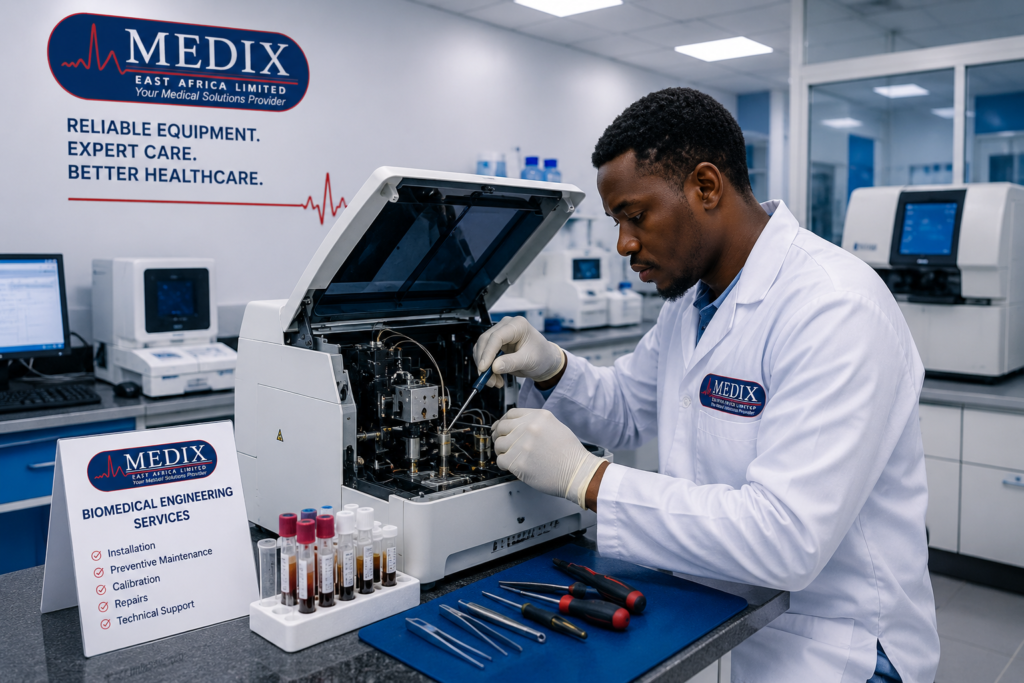
Strong biomedical engineering support helps healthcare facilities:
- reduce downtime
- improve preventive maintenance
- maintain calibration accuracy
- improve equipment lifespan
- reduce repair costs
Professional biomedical servicing is essential for modern healthcare operations.
Building a Strong Maintenance Program
An effective biomedical maintenance program should include:
- preventive maintenance schedules
- equipment inventory systems
- operator training
- calibration management
- technical documentation
- emergency response procedures
- spare parts planning
Healthcare facilities with strong maintenance programs experience fewer operational disruptions and better patient care outcomes.
Frequently Asked Questions
Why is preventive maintenance important for medical equipment?
Preventive maintenance helps identify problems early, reduces equipment downtime, improves safety, and extends equipment lifespan.
Can poor maintenance affect patient care?
Yes. Equipment malfunction may delay diagnosis, affect treatment accuracy, and compromise patient safety.
Why should hospitals use qualified biomedical engineers?
Qualified biomedical engineers understand equipment safety, calibration, servicing procedures, and manufacturer requirements.
How often should laboratory equipment be serviced?
Servicing frequency depends on equipment type, workload, and manufacturer recommendations.
Can unstable power damage medical equipment?
Yes. Voltage fluctuations and power surges may damage sensitive medical systems and electronic components.
Conclusion
Biomedical equipment maintenance remains one of the most important aspects of modern healthcare operations. Hospitals and laboratories that ignore preventive maintenance, delay servicing, or use poor operational practices often experience unnecessary equipment failures, increased costs, and reduced patient care quality.
By implementing strong maintenance programs, training healthcare staff, maintaining proper documentation, and working with qualified biomedical engineering teams, healthcare facilities can significantly improve equipment reliability and operational efficiency.
As healthcare technology continues advancing across Kenya and East Africa, proper biomedical equipment maintenance will remain essential for safe, accurate, and efficient healthcare delivery.